


Waste Management
Industrial Dewatering Machine in Action: GREENMAX PC350 at CSG Blackburn
In beverage production, food packaging and industrial waste management, some discarded containers still contain residual liquids. These liquids can increase waste weight and cause leakage during storage and transportation.
CSG Blackburn, a specialist hazardous and chemical waste management company in the UK, faced this challenge when handling waste materials such as used hand sanitiser containers. These packages required the separation of residual liquids from solid packaging before further treatment.
As business volumes increased, the company's existing dewatering capacity became insufficient. In 2023, CSG decided to add another dewatering machine and introduced the GREENMAX PC350 to expand its existing processing capacity.
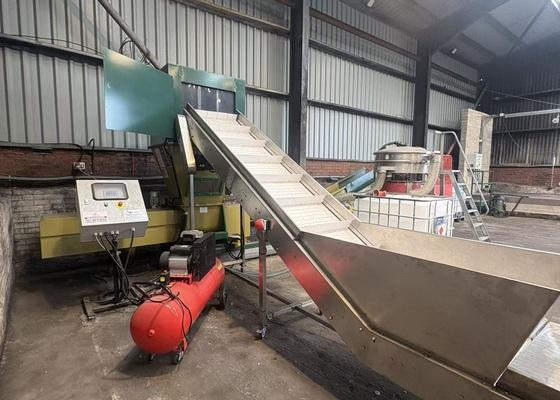
From RUNI to GREENMAX PC350: Expanding Dewatering Capacity
Before introducing GREENMAX equipment, CSG had already been operating a RUNI dewatering machine and had practical experience with mechanical dewatering processes.
Rather than replacing its existing equipment, CSG chose to expand its processing capacity by adding another machine. After evaluating equipment performance, operational compatibility and overall investment costs, the company selected the GREENMAX PC350 Dewatering Compactor.
According to project feedback, CSG was positive about the PC350's performance, considering it comparable with European equipment while offering very good value for money. Adding the PC350 allowed CSG to increase its dewatering capacity while keeping its existing equipment in operation.
How Does the GREENMAX PC350 Dewater Liquid-Containing Packaging?
Some hand sanitiser containers handled by CSG still contain residual liquids. Emptying each container manually requires considerable time and labour, making it less practical when processing volumes increase.
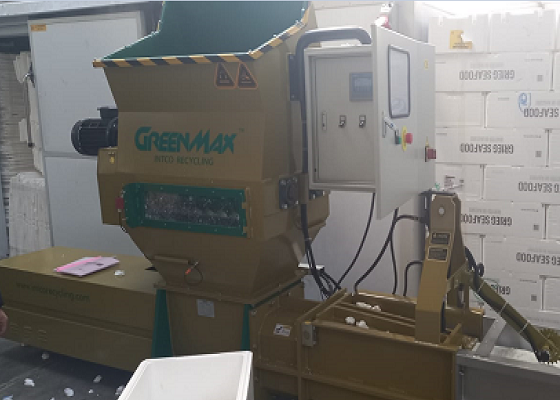
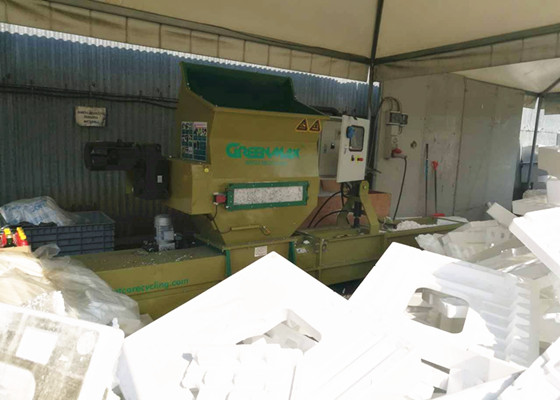
The GREENMAX PC350 uses screw compression technology to separate residual liquids from packaging while reducing the volume of solid materials.
After entering the machine, the packaging is fed into the screw compression system. Mechanical pressure squeezes out the remaining liquid, which flows into the collection area beneath the machine. The compacted solid packaging is then discharged for further handling.
After processing, the two material streams can be managed separately:
1. Separated Liquid: Depending on its properties, contamination level and applicable waste management requirements, the liquid is collected, stored or sent for appropriate further treatment. Residual liquids from hand sanitiser and other specialised packaging must be handled according to their actual composition and local regulations.
2. Solid Packaging: After dewatering and compaction, the packaging takes up less space, making it easier to store and transport. Whether it can enter a plastic recycling process depends on the material type, contamination level and acceptance requirements of downstream recyclers.
This process reduces manual emptying and improves the initial handling of liquid-containing packaging. For CSG Blackburn, the PC350 provided additional capacity to manage increasing volumes of packaging waste.
How to Choose the Right Industrial Dewatering Machine
Packaging materials, container sizes, residual liquid levels and processing volumes vary between businesses. The GREENMAX Bottles Dewater Series offers three models: P-C200, P-C350 and P-C900. Additional feeding, liquid collection and baling configurations can also be considered according to project requirements.
1. Packaging Materials and Container Dimensions
Different packaging materials have different physical properties, which can affect their suitability for mechanical dewatering. The GREENMAX Poseidon Series is designed for a range of materials, including PET bottles, HDPE bottles, aluminium cans, drink cartons and yoghurt cups.
The three models have different feed hopper dimensions: 1000 × 1000 mm for the P-C200, 1200 × 1000 mm for the P-C350 and 1400 × 1000 mm for the P-C900. Businesses can select a suitable configuration according to their container sizes and feeding requirements.
The suitability of specialised chemical packaging should be assessed according to its material composition and actual processing conditions.
2. Residual Liquid Properties and Collection Requirements
Different packages may contain beverages, food liquids or industrial chemicals. Their properties can affect both the subsequent treatment process and the requirements for liquid collection.
The Poseidon Series separates residual liquids through screw compression, with the liquid collected in a tray beneath the machine. According to the product specifications, the collection tray is made of acid-resistant stainless steel to withstand contact with many low-pH liquids.
For specialised chemical liquids, GREENMAX can assess equipment suitability based on liquid properties, contamination levels and site requirements. Material compatibility and relevant safety considerations should be confirmed before selecting the equipment.
3. Processing Capacity and Model Selection
The GREENMAX Poseidon Series includes three models with different power configurations, screw speeds and feed hopper dimensions.
The P-C200 and P-C350 share the same power rating and screw speed but have different feed hopper dimensions. The P-C900 features a larger feed hopper and a different power configuration.
GREENMAX can recommend a suitable model based on material type, daily processing volume and operating hours. The screw reduction ratio is a machine specification and should not be interpreted as the guaranteed actual volume reduction of every type of packaging. Actual processing results depend on the materials being handled.
For more information about the P-C350, visit the GREENMAX PC350 Dewatering Compactor.
4. Automation and Integration with Downstream Processes
For businesses handling large volumes of liquid-containing packaging, feeding efficiency, liquid collection and downstream material handling are also important considerations.
The Poseidon Series can be configured with an automatic lifting system and material conveyor to reduce manual feeding work. After dewatering, the solid packaging can also be transferred to a GREENMAX Vertical Baler for further compaction, producing compact bales that are easier to store and transport.
GREENMAX offers different baling configurations and can customise equipment layouts according to available space, feeding arrangements and production requirements. This helps connect dewatering and baling operations into a more coordinated processing system.
GREENMAX Poseidon Series Dewatering Solutions
The CSG Blackburn project demonstrates how the GREENMAX PC350 helps separate residual liquids and reduce packaging volume. The Poseidon Series includes P-C200, P-C350 and P-C900 models for processing PET bottles, HDPE bottles, aluminium cans, drink cartons and yoghurt cups, with optional automatic feeding and downstream baling configurations.
For businesses handling PET bottles, GREENMAX also offers a PET Bottles Recycling Solution. Contact our team with your material details and processing requirements to find a suitable dewatering solution.