When looking for a Styrofoam densifier for sale, the starting point should be the waste itself—not simply the highest throughput or densification ratio on a specification sheet. The form and condition of the EPS, the time available for processing, transport distance, and the destination of the recovered material can all affect what equipment configuration makes sense.
For businesses regularly handling EPS packaging, protective foam, or production scrap, densification can reduce the space required for storage and make the material easier to transport for recycling. The machine needs to fit the way the waste is generated and handled at the facility.
Start With the EPS You Need to Process
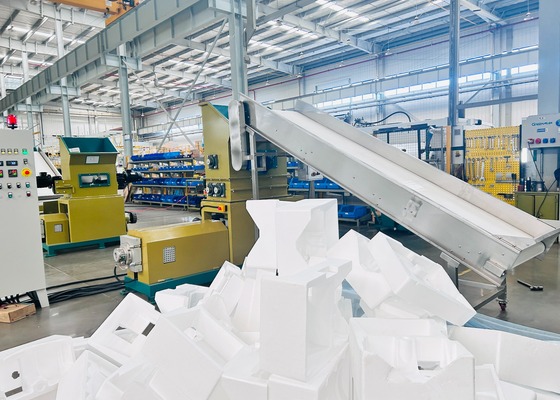
Clean EPS production scrap behaves very differently from large appliance packaging, furniture protection, or used foam boxes. Even when two facilities generate a similar weight of EPS each day, differences in material size and condition can lead to different processing requirements.
Small, relatively uniform pieces are generally easier to feed continuously. Large molded packaging may require more handling before it reaches the machine, particularly when volumes increase. In some operations, shredding the foam first can create a more consistent feed and reduce the amount of manual breaking required.
Tape, labels, paper, moisture, and other contaminants also need to be considered. They may affect processing and can influence whether the densified material meets the requirements of a downstream recycler.
The size, shape, and condition of the EPS should therefore guide the equipment configuration from the beginning.
Match Capacity to the Way the Equipment Will Run
Daily waste volume is useful, but it does not tell the whole story.
Consider a facility generating 500 kg of EPS per day. If the densifier can operate throughout the production shift, the material can be processed gradually. If the company only has two or three hours available for foam recycling at the end of the day, the same 500 kg must be handled in a much shorter period. That changes the hourly capacity required.
Feeding conditions also affect real output. Small production offcuts can usually enter the machine at a relatively steady rate, while bulky packaging may require handling, breaking, or shredding before it reaches the densifier.
A rated kg/h figure is useful when comparing an EPS densifier machine, but it should be considered together with daily waste volume, available operating time, and the way material will actually be fed.
Decide Whether Hot-Melt Densification Fits the Recycling Route
Hot-melt densification becomes particularly useful when loose EPS creates a significant storage or transportation problem.
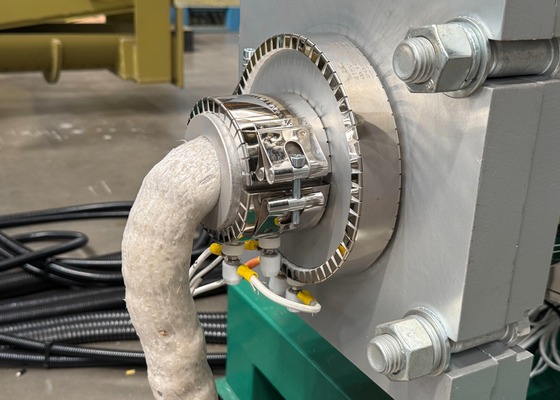
The process uses screw conveying, heating, and extrusion to convert low-density EPS into dense ingots. For businesses that need to transport recovered foam over longer distances or consolidate material before further recycling, the higher density can make storage and logistics much easier to manage.
For operations where this level of volume reduction is needed, the GREENMAX MARS series uses screw melting technology to convert loose EPS into dense ingots, reducing its volume by approximately 90:1. This makes the process suitable for applications where reducing transport volume is an important part of the recycling route.
Hot melting, however, is not automatically the right choice for every facility. If a nearby recycler already accepts mechanically compacted EPS blocks and transport distances are short, cold compaction may be sufficient. Hot melting becomes more relevant when storage pressure, longer-distance transportation, or downstream requirements make a denser output worthwhile.
Before purchasing a Styrofoam densifier, it is therefore worth confirming where the processed EPS will go, how far it needs to travel, and what form of material the recycler prefers.
Long-Term Use Matters More Than a Single Specification
A densifier is usually purchased to solve a waste-handling problem that will continue for years. For businesses with a stable supply of EPS, daily operating conditions can become just as important as nominal machine capacity.
Furniture retail provides a useful example. Large furniture items often arrive with bulky EPS protective packaging, which continues to accumulate as products are unpacked. In one long-term application, a large furniture retailer introduced a GREENMAX M-C300 hot-melt densifier to handle this steady flow of EPS packaging waste at its warehouse. During a later customer-site visit, the equipment was still in operation after around seven years of use.
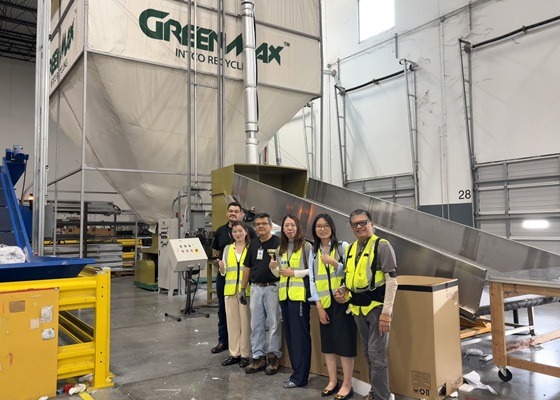
The important point is not simply the model used. The EPS waste was generated consistently, so the recycling equipment needed to become part of the warehouse's normal waste-handling routine rather than serve as a temporary solution.
For companies with predictable EPS volumes, long-term handling convenience, equipment reliability, and compatibility with the downstream recycling route deserve as much attention as the headline processing capacity.
Leave Room for Changes in Waste Volume
A facility that can manage manual feeding today may handle considerably more EPS in the future. As volumes rise, the limitation may shift from the densifier itself to the way bulky foam is prepared and fed.
Large EPS pieces may eventually need shredding before densification, while higher-volume operations may benefit from temporary storage or a more consistent feeding process. These additions should be considered when the waste stream justifies them rather than included automatically in every system.
For higher-volume projects, the densification process can therefore be configured with shredding, storage, or feeding equipment as needed. GREENMAX uses this approach when a standalone densifier is no longer enough to match the material flow, allowing the equipment configuration to follow the way EPS is actually generated and processed.
Site layout also matters. If workers need to carry loose foam a long distance before it reaches the machine, even a correctly sized densifier may not improve the overall process as much as expected. The waste collection route, feeding area, maintenance access, and storage space for finished ingots should all be considered during equipment planning.
Start the Equipment Discussion With Real Waste Information
A useful equipment recommendation requires more than a daily tonnage figure.
Photos of the EPS can quickly show its shape and approximate size. When this is combined with daily or weekly waste volume, planned operating hours, and the intended destination of the processed material, it becomes much easier to determine whether hot-melt densification is suitable and what processing capacity is required.
If the facility handles particularly large packaging or expects its EPS volume to increase, the same information can also help determine whether shredding, storage, or additional feeding equipment should be considered.
For businesses comparing a Styrofoam densifier for sale, the most suitable machine is not necessarily the largest one or the one with the highest densification ratio. It is the machine that fits the EPS waste, operating schedule, transport conditions, and downstream recycling route.
If you already have a specific EPS waste stream, photos of the material, approximate dimensions, and daily volume are usually enough to begin an initial equipment evaluation.