
Packaging waste management is changing in the United States. In California, for example, SB 54 is bringing packaging under an extended producer responsibility system, with targets for source reduction, recyclability and recycling of single-use packaging and plastic food service ware. For businesses that regularly use or generate large amounts of plastic packaging, there is growing attention on how that material is collected, recycled and moved into the next stage of recovery.
For businesses dealing with foam waste, the material is not always EPS. EPS is widely used to protect appliances and electronics, EPE is common in logistics and industrial protective packaging, EPP can be found in automotive components and packaging, while EPS and XPS scrap can come from insulation manufacturing and fabrication. These materials behave differently, but they share a practical problem: they are lightweight and can take up a significant amount of space.
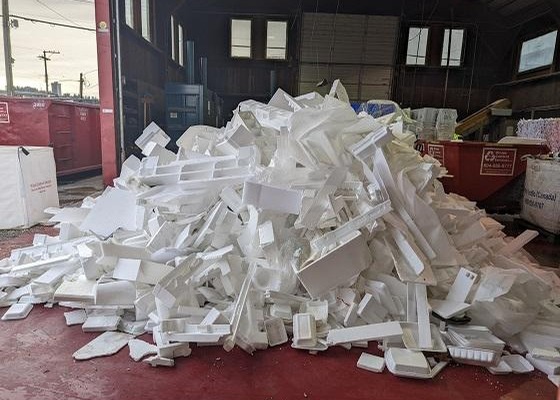
A business that generates only a small amount of foam occasionally may have little reason to invest in its own recycling equipment. The situation changes when foam becomes a regular waste stream that starts affecting storage, production areas or waste collections. When evaluating a styrofoam recycling machine, annual tonnage alone does not tell the whole story. Generation frequency, storage space, collection frequency, material size and the existing waste-handling process can all affect whether on-site processing makes sense.
When Does It Make Sense to Process Foam On Site?
For manufacturers, warehouses and distribution centers, the need for a foam recycling machine often becomes clear through day-to-day operations rather than total waste weight. Loose foam generated every day or every week can quickly fill a waste area, require repeated handling by employees, or trigger frequent collections even when the actual weight being removed is relatively low.
Available space also changes the calculation. A facility with a large storage area may be able to accumulate loose foam before arranging a collection, while a site with limited space can reach the same problem much sooner. Looking at how quickly foam fills the designated waste area, how often it is collected and what those collections cost can therefore be more useful than looking at annual tonnage alone.
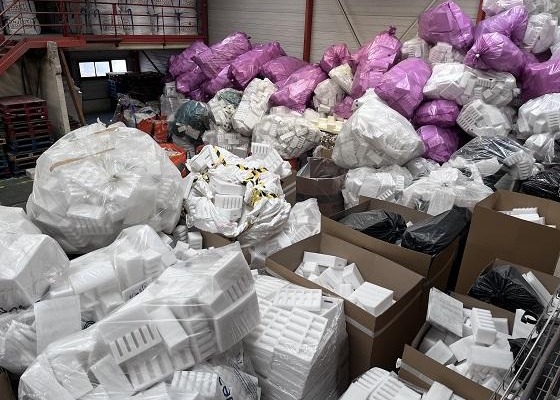
One U.S. high-tech manufacturer faced this situation with EPS coolers from laboratory reagents and protective packaging from equipment components. The loose EPS was being removed by a third-party waste management company, typically one to two times per week at a cost of approximately $500–$600 per collection. Foam packaging had become a regular waste stream, while the facility also maintained high standards for workplace organization and cleanliness.
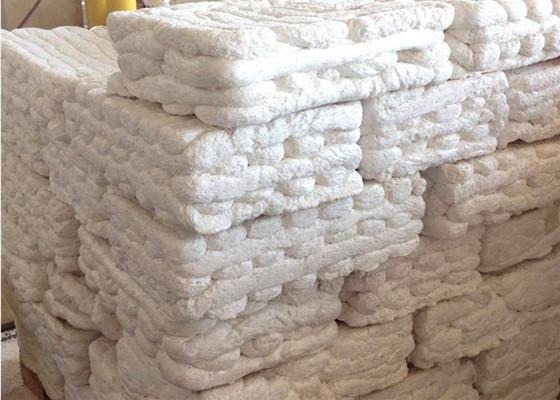
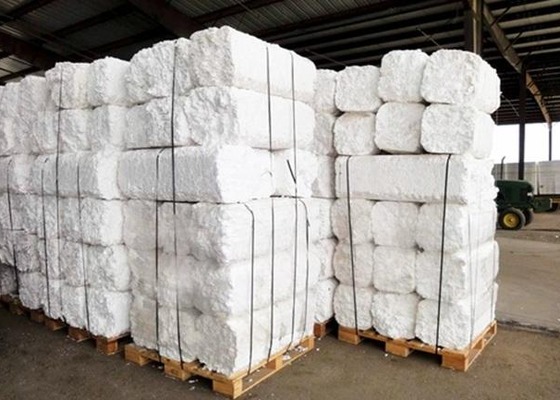
The company eventually installed a foam compactor to process the EPS on site. Loose foam is shredded and cold-compacted into blocks before being sent for further recycling. If loose foam requires regular handling, occupies valuable space or repeatedly triggers collections, on-site volume reduction may be worth evaluating.
Foam Recyclers Face a Different Set of Requirements
Professional recyclers operate differently from businesses that generate their own foam waste. Instead of receiving material from one relatively consistent source, a recycler may collect foam from retailers, warehouses, manufacturers and other commercial customers. Individual suppliers may generate modest quantities, but material from multiple sources can create a steady processing stream once it reaches a central foam recycling facility.
Incoming material can also vary considerably. One load may contain large molded EPS packaging, while another includes EPE cushioning, EPP or XPS board scrap. Material type, dimensions and incoming volume may change from one batch to another. For this type of operation, a foam recycling machine should be evaluated around the main materials being received, typical daily throughput and feed size rather than simply how many foam types the machine is listed as being able to process.
How Should a Styrofoam Recycling Machine Be Configured?
A styrofoam recycling machine is a broad term rather than one specific type of equipment. The starting point is the foam itself and the condition in which it arrives. Large molded packaging may require size reduction before it can be processed efficiently, while flexible EPE can behave differently from EPS, EPP or XPS during feeding and volume reduction. Facilities handling several foam types also need to determine whether those materials can be processed through the same equipment configuration.
The system should also match the way foam moves through the facility. A manufacturer generating a consistent waste stream may need equipment that fits its normal production schedule, while a recycler receiving material from multiple suppliers may place greater emphasis on varying feed sizes and continuous processing. If oversized foam is difficult to feed, front-end size reduction may be part of the system. If loose material is creating storage and transportation problems, the next step is to determine a suitable method of volume reduction for that material.
For GREENMAX projects, equipment can be configured around the foam type, feed size, processing volume and site conditions. Available solutions can include front-end shredding together with foam compactors or foam densifiers, depending on the actual application. The same configuration should not be assumed for EPS, EPE, EPP and XPS simply because more than one foam type can be processed.
If foam is generated only occasionally and an existing recycler can accept it in loose form, installing dedicated equipment may not be necessary. When foam has become a regular waste stream, start with four practical questions: What type of foam are you handling? What size is it? How much do you normally generate or receive? Where is the current handling process creating the greatest difficulty? These answers provide a better basis for deciding whether you need a styrofoam recycling machine and what type of equipment fits the operation than starting with a machine model or specification.