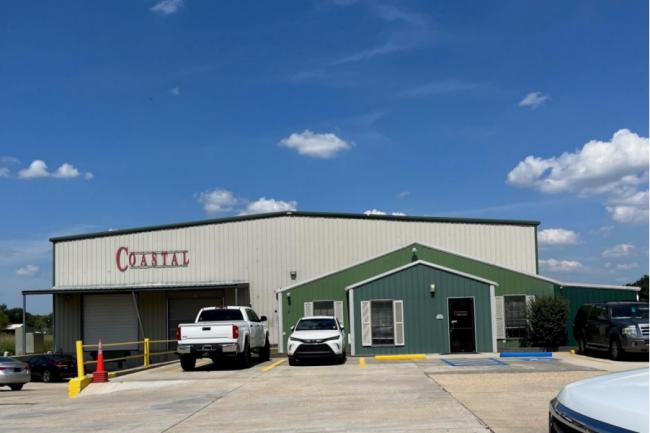
Coastal Food Service needed a more efficient solution for bulky EPS packaging waste and rising disposal costs. GREENMAX provided a scalable EPS foam recycling system featuring the M-C200E densifier and automated feeding equipment.
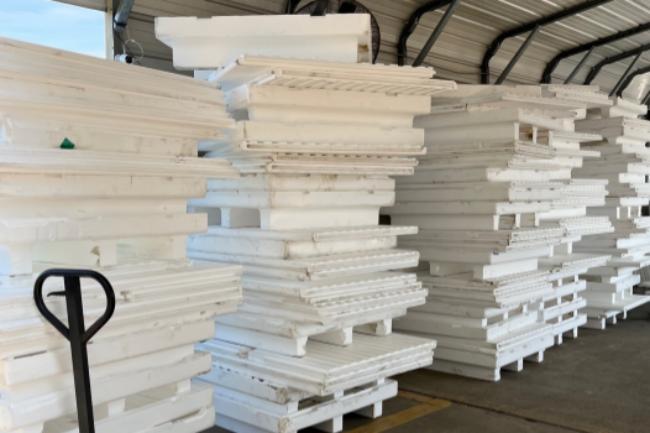
Challenge: EPS is bulky, creating significant pressure regarding storage and handling
For Coastal Food Service, the main challenge with EPS was not its weight, but the excessive space occupied by loose foam. Loose foam is inconvenient to store and necessitates frequent removal. For Coastal Food Service, the primary goal was to reduce the material's volume on-site while simultaneously paving the way for subsequent recycling.
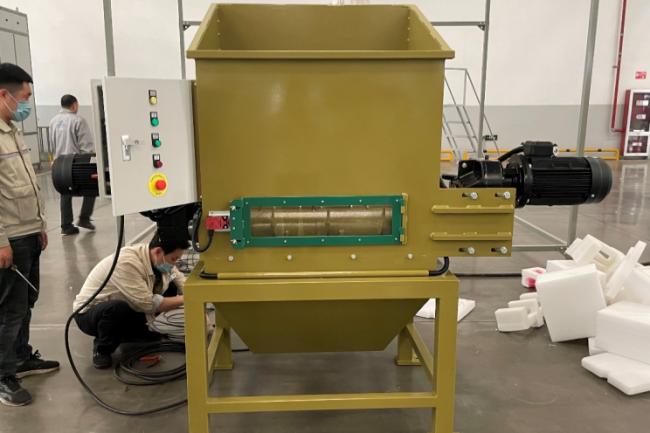
Solution: GREENMAX M-C200E Foam Densifier
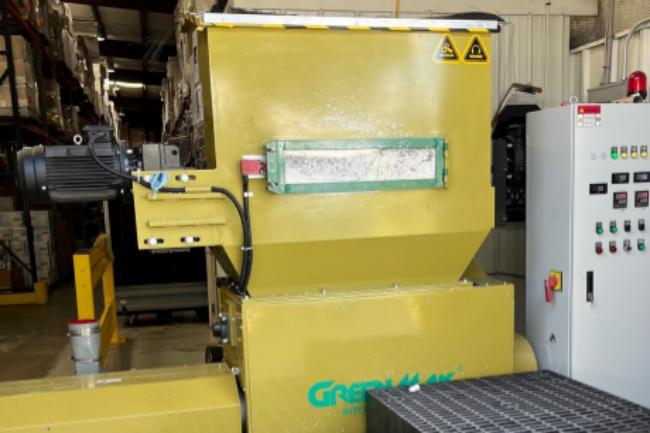
After evaluating the client's EPS generation volume, available space, and operational requirements, GREENMAX recommended the M-C200E foam densifier, which was installed and put into operation in 2023. The machine compresses loose EPS into dense blocks, facilitating easier storage and transportation.
Since being put into operation, the M-C200E has run consistently and reliably; it not only reduces the space occupied by foam and streamlines warehouse management but also enhances the overall efficiency of EPS foam recycling.
From waste disposal to closed-loop EPS recycling
The compacted EPS is no longer treated as ordinary waste. Coastal Food Service sells the compacted blocks to INTCO Recycling, securing a stable downstream outlet for the recovered material and creating a practical closed-loop EPS recycling process that spans from volume reduction to downstream recycling.
System Upgrade: Foam Shredder + Silo Storage and Automatic Feeding System
As the business has grown, the company has generated increasing amounts of EPS. While the M-C200E itself remains reliable, a new bottleneck has emerged in the pre-processing stage: large EPS pieces sometimes require manual downsizing, and higher EPS volumes mean staff must feed material into the machine more frequently.
To address this change, GREENMAX did not replace the existing densifier; instead, it added a foam shredder and a silo storage and automatic feeding system to the current setup. Large pieces of EPS are first shredded into smaller, more uniform material, then stored temporarily in the silo before being continuously fed into the M-C200E.
This reduces the workload associated with manual dismantling and frequent material feeding, ensures a more stable material supply to the densifier, and makes the entire recycling process more continuous.
EPS recycling solutions that scale with business growth
The case of Coastal Food Service demonstrates that investing in an EPS foam recycling system is not merely a matter of selecting a single machine once and for all. Initially, a densifier can be used to reduce volume and address space, storage, and transportation challenges; as the volume of waste grows, additional components—such as shredding, storage, and automatic feeding systems—can be integrated based on labor requirements and processing efficiency needs.
For businesses involved in food wholesale and distribution, cold chain logistics, and other operations that generate large volumes of EPS packaging waste, a more professional solution should take into account material volume, site constraints, labor, storage, transportation, and the ultimate destination of the recycled material, rather than focusing solely on individual pieces of equipment.
FAQ
What EPS foam recycling equipment does Coastal Food Service use?
The project initially utilized a GREENMAX M-C200E foam densifier; as the volume of EPS increased, a foam shredder and a silo storage and automatic feeding system were subsequently added.
Why add a foam shredder and a silo?
The primary goal is to reduce the need for manual dismantling of large EPS pieces and frequent material feeding. The shredded material can be temporarily stored in a silo before being fed more continuously into the M-C200E.
How should compressed EPS blocks be handled?
Coastal Food Service sells compacted EPS to INTCO Recycling, entering the downstream recycling process.
Looking for an EPS recycling solution that suits your needs?
If your business faces challenges such as the high volume of EPS waste, excessive manual handling, or the need for frequent disposal, GREENMAX can recommend a suitable EPS foam recycling system tailored to your material generation rates, available space, and operational requirements. Furthermore, the system allows for future expansion of the shredding, storage, and automatic feeding components as processing volumes increase.