
Daily EPS waste weight and available processing time are the starting points for choosing a densifier. A facility processing 400 kg of EPS in four hours needs an average throughput of 100 kg/h. If the same material must be processed in two hours, that requirement rises to 200 kg/h. Foam dimensions and feeding arrangements then help determine which GREENMAX MARS model to evaluate.
Densification is also receiving greater recognition within the recycling industry. On August 19, 2026, the U.S. Plastics Pact removed EPS transport packaging from its Problematic & Unnecessary Materials List. Its statement identified densification as an investment that can improve transportation efficiency and collection economics. For appliance, furniture and electronics businesses, equipment selection still comes down to the packaging waste their facilities need to process.
The GREENMAX MARS foam densifier range uses crushing, heating and screw extrusion to turn loose foam into dense ingots for storage, transportation and further recycling. Choosing the right capacity means matching that process to incoming waste, staff availability and output handling.
Calculate Required Throughput from Daily EPS Waste
Start by recording EPS waste over a representative period, including ordinary working days and busy delivery or production days. If the site currently measures waste by bags or carts, weigh several typical loads to establish a useful reference. Different packaging shapes can produce noticeably different weights within the same container.
The initial calculation is:
Required average throughput (kg/h) = EPS weight to be processed (kg) ÷ effective processing time (h)
For example, suppose a distribution center generates 400 kg of EPS per day. After allowing for material transfer and preparation, four hours remain available for processing. The required average throughput is 100 kg/h. With only two hours available, it becomes 200 kg/h.
Processing time should reflect the actual staffing arrangement. An eight-hour warehouse shift does not automatically provide eight hours of continuous feeding. Foam may need to be collected from several workstations, and the operator may have other responsibilities.
This calculation narrows the equipment options. It describes the average rate the site needs to achieve; the final selection should also establish whether the machine can sustain that rate with the actual foam and feeding conditions.
Check Foam Dimensions and Feeding Conditions
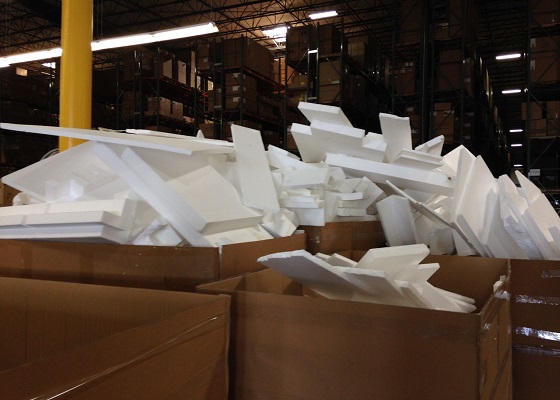
Appliance, furniture and electronics packaging often includes large bases, corner protectors and irregular molded sections. These pieces may weigh little but take time to handle. Whether they fit the feed opening—and whether they need preparation—affects how quickly material reaches the machine.
If staff must cut most packaging into smaller pieces before feeding, the process may fall behind even when the melting section has sufficient capacity. Review the feed opening, crusher configuration and material transfer arrangements together.
Production offcuts may present a different requirement. Consistently sized EPS generated throughout a shift can be easier to supply steadily. A warehouse may instead produce a large batch during unpacking, followed by a period with little incoming material. Where batch feeding is significant, a silo and suitable feeding configuration can help connect material preparation with downstream densification.
A trial using representative waste helps assess these conditions. Include common large packaging pieces and a range of sizes. Observe how readily they enter the machine, whether crushed material feeds consistently and how much preparation the operator needs to perform.
Compare GREENMAX MARS Capacity Options
GREENMAX MARS models provide several capacity options. Compare the calculated requirement with the specifications, then assess the feeding conditions needed to achieve the required daily output.
| GREENMAX MARS Model | Rated EPS Throughput |
|---|---|
| M-C50 | 50 kg/h |
| M-C100 | 100 kg/h |
| M-C200 | 200 kg/h |
| M-C300 | 300 kg/h |
If the required average throughput is 100 kg/h, the M-C100 has a matching rated capacity. Whether it can complete the workload within the available time still needs confirmation using the actual material and feeding arrangement. Sites with limited processing windows or frequent fluctuations should also evaluate higher-capacity models.
The GREENMAX M-C300 foam densifier has a rated EPS throughput of 300 kg/h, an EPS volume reduction ratio of 90:1 and a densified EPS density of 600–800 kg/m³. Its configuration includes crushing, pneumatic conveying and silo storage, with project requirements used to confirm the final arrangement.
Floor space also matters. The layout needs room for feeding, operation and output handling. Higher throughput requires adequate material supply; a larger machine cannot make full use of its capacity if foam arrives too slowly.
If the business also generates EPE or XPS, provide separate information about each material, its dimensions and quantities. EPS throughput figures should not be assumed to apply equally to other foam materials.
Living Spaces Uses M-C300 for Furniture Packaging Waste
U.S. furniture retailer Living Spaces generates EPS packaging waste through its distribution operations. Previously, it sent foam to local recycling companies, but changing scrap market conditions sometimes left the business paying for disposal.
Living Spaces purchased its first GREENMAX M-C300 in early 2016, followed by two additional units for other locations. Densification converted bulky packaging into dense ingots that could enter downstream recycling. By 2022, six distribution centers had adopted GREENMAX foam recycling systems.
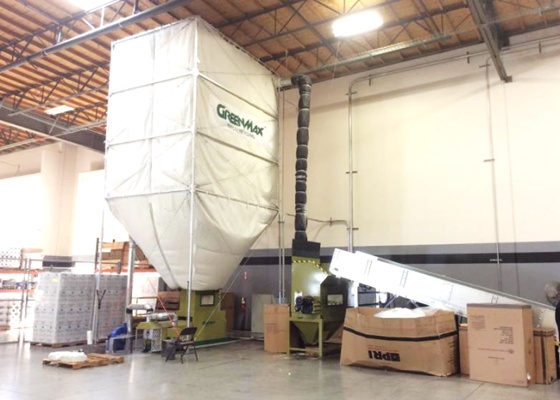
The Living Spaces furniture packaging recycling case shows how a Styrofoam densifier can be incorporated into distribution operations handling recurring packaging waste.
Plan for Peak Loads and Ingot Handling
Average daily weight describes the normal workload, but concentrated deliveries and seasonal production can increase demand. If a site typically generates 200 kg of EPS per day and reaches 300 kg during peaks, it needs a practical way to process the additional material. That might involve longer operating hours, more frequent feeding or a higher-capacity machine working within the existing schedule.
Capacity allowance should reflect how long peaks last and how much loose foam the site can store. Occasional increases may be manageable through scheduling. Frequent peaks or limited storage space may justify greater processing capacity. Confirmed expansion plans should also be discussed during equipment selection.
Allow space for ingots to cool, accumulate and be prepared for shipment. Check the recycler’s material, contamination and collection requirements before finalizing the arrangement. An investment assessment can then consider equipment, electricity, labor, maintenance and transportation costs alongside the expected improvements in handling.
To begin a GREENMAX MARS capacity assessment, share photographs of the EPS waste, an approximate daily weight and the processing time available. If weight records are not yet available, weekly bag or cart counts and container dimensions can provide an initial reference. GREENMAX can use this information to discuss suitable models and clarify the feeding configuration required for the site.